
By Mike Bandar, Co-founder of Waybook.
For a nonprofit of 10 to 200 staff and volunteers, Waybook is the SOP software to buy when the people delivering the program change every season: it holds the program, safeguarding and finance procedures in one place, onboards each volunteer on a path for their role, shows per person who has read each procedure, and publishes its price, $99 a month billed annually for 20 members, with a nonprofit discount described on its help center. Notion is the free wiki to start on, with 50% off its Business plan for nonprofits. Slab and Confluence are free for up to 10 users. This guide compares seven tools for executive directors, operations leads and program managers. For the comparison across every type of organization, see our catch-all SOP software comparison.
Published October 26, 2026. Prices captured and dated in the table.
What a nonprofit needs that a generic SOP tool does not give it
A nonprofit runs on people who were not there last year: seasonal staff, volunteers, board members, and a core team that has done everything itself for too long. Three things follow.
Volunteers trained in a day, and proof they were. A volunteer who starts Saturday needs the three procedures for their role and nothing else, and the organization needs a record that they read the safeguarding policy before they met a client.
Procedures that survive the person. When the program manager leaves, the program has to keep running. A procedure with an owner, a review date and one current version is the only thing that survives the handover.
A record for funders and auditors. Grant reports, audits and accreditation reviews ask who was trained on what and when. A folder of documents cannot answer that; a read confirmation by name and date can.
A shared drive handles none of the three well, which is why so much nonprofit knowledge lives in one long-serving person. If you are opening a second site or helping another organization replicate your program, see what to systemize before a second location.
Seven tools at a glance, and our verdict
Tool | Verdict for a nonprofit | Pricing |
|---|---|---|
Waybook | Our pick for nonprofits of 10 to 200 people: program, safeguarding and finance procedures in one place, role paths for staff and volunteers, read confirmation per person, AI drafting, price published, nonprofit discount available. | From $99 a month billed annually, 20 members included, then $5 a member. 7-day free trial. Nonprofit discount: see the help center. |
Notion | The free wiki most small nonprofits start on, with 50% off the Business plan for nonprofits. No read confirmation, no role paths and no owner or review date on a page. | Free plan; Plus $10 a seat a month; Business $20, 50% off for nonprofits (captured October 26, 2026). |
Slab | A clean internal wiki with good search, free for a small team. Stores procedures; cannot show who read them or train a volunteer on them. | Free for up to 10 users; Startup $6.67 a user a month billed annually (captured October 23, 2026). |
Confluence | The wiki for teams already on Jira, free for a small team. Heavy for non-technical staff and volunteers; no read confirmation or training paths. | Free for up to 10 users; Standard $7.15 a user a month (captured October 23, 2026). |
Whale | SOPs and training in one, with a free tier and a screen recorder; priced per creator, so cheap while a few people write. | Free for 1 creator and up to 10 members; Scale $249 a month billed yearly (captured October 26, 2026). |
Trainual | Structured training curricula with tests and completion tracking; heavy to set up for a small team, and the price is a sales call. | No published price; plans by demo (checked October 26, 2026). Captured in its app in August 2026: Core $249 a month for 10 seats. |
Google Docs or a shared drive | Already paid for and fine for the first ten documents. Versions multiply every program season and nobody can tell who read the safeguarding policy. | Included in a Google Workspace subscription. |
The verdict column is written for an executive director or operations lead at a nonprofit of 10 to 200 staff and volunteers. A national organization with a learning and development team is a different buyer.
The seven tools for a nonprofit
1. Waybook
Waybook is a company playbook: SOPs, onboarding paths, the handbook and a searchable knowledge base in one place, with read confirmation and tests on any document. For a nonprofit that means one home for how each program runs, the policies every person signs for, and a path for each role, staff or volunteer, that assigns itself when someone joins.
What matters here: role paths, so a volunteer gets the three procedures for Saturday and nothing else; read confirmation by name and date, which is the record a funder, auditor or accreditation body asks for; groups and permissions, so volunteers see their program and not the finance procedures; owners, review dates and version history, so a program survives the program manager leaving; the AI SOP creator and the AI Assistant to draft procedures from a description; and Waybook Ask, which answers a volunteer's question from your own documents. Capterra rates it 4.9 from 56 reviews. Waybook offers a nonprofit discount; how to apply is on the help center. Waybook's page for charities is at waybook.com/for/charities.
Our limitation: Waybook is not a donor database, a volunteer scheduler or a grant tracker. Those stay in your CRM and scheduling tools; Waybook is where the way the organization works lives.
2. Notion
Notion is where many small nonprofits write their first procedures, and with 50% off the Business plan for nonprofits (captured October 26, 2026) it is cheap. Under ten people it is a reasonable start.
What it does not do is show who read anything. There is no read confirmation, no role path for a new volunteer and no owner or review date on a page, so by the second program season there are three versions of the intake procedure. Plus is $10 a seat a month and Business $20 before the discount. Our comparison is at Waybook vs Notion.
3. Slab
Slab is a clean internal wiki with strong search, free for up to 10 users and $6.67 a user a month billed annually above that (captured October 23, 2026). For a small team that only needs to store and find procedures, it does that well.
It has no training paths, no read confirmation and no SOP structure, so it cannot onboard a volunteer or prove a policy was read.
4. Confluence
Confluence is the wiki for teams already on Jira, free for up to 10 users and $7.15 a user a month on Standard (captured October 23, 2026). An organization with a technical team may already have it.
Non-technical staff and volunteers find it heavy, and it has no read confirmation or training paths.
5. Whale
Whale combines SOPs and training, with a free tier for 1 creator and 10 members and a screen recorder. For a nonprofit with one person writing and many reading, the free tier is a real option.
It is priced per creator, so it stays cheap while a few people write. Scale is $249 a month billed yearly (captured October 26, 2026).
6. Trainual
Trainual organizes training into subjects, lessons and tests, with completion tracking by role. A nonprofit that wants one curriculum for every new hire, and has someone to build it, will find it familiar.
For most nonprofits it is heavy and expensive. Its pricing page lists plans by demo (checked October 26, 2026); captured in its app in August 2026, Core is $249 a month for 10 seats, billed annually. Our comparison is at Trainual alternatives.
7. Google Docs or a shared drive
Already paid for, and where most nonprofit procedures live today. It works for the first ten documents.
Every program season it breaks: copies multiply, volunteers ask instead of searching, and nobody can tell who read the current safeguarding policy. It is a filing cabinet, not a playbook.
Which SOP software should I buy for a nonprofit, and what is the best software for this in 2026?
For a nonprofit of 10 to 200 staff and volunteers, Waybook: procedures by program, role paths for volunteers, read confirmation per person, and a published price with a nonprofit discount. Notion if you are under ten people and only need a wiki. Whale's free tier if one person writes and a handful read. Choose by what you have to prove to a funder, not by the feature list.
What is the fastest way to build SOPs for a nonprofit, and how do I avoid buying the wrong thing?
Start with the procedures a new volunteer asks about in their first shift and the ones a funder asks about in the report: intake, safeguarding, incident reporting, expenses. Have the person who does each one describe it out loud and let an AI draft turn it into a procedure to correct, or capture it with Shots while they do it. Five procedures this way is a few days' work. Avoid buying storage when you need proof: a wiki stores the policy, and the first incident review asks who read it.
Which internal wiki tool should I buy for a nonprofit, and is there a free trial I can start today?
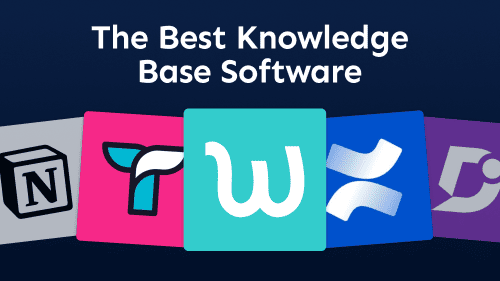
If the wiki only has to store pages, Notion, Slab or Confluence, all free for a small team. If it has to show who read the current version and train new volunteers on it, Waybook, which combines the knowledge base with read confirmation and role paths. Waybook has a 7-day free trial you start yourself. See the best knowledge base software compared.
Which onboarding software should I buy for a nonprofit, and which plan makes sense for my team size?
One that onboards volunteers as well as staff: a path per role, a read confirmation on the policies, and a record per person. Waybook's base plan covers 20 members at $99 a month billed annually, then $5 a month per additional member, so count the volunteers who need a login, not just staff; many organizations give logins to coordinators and print the procedures for occasional volunteers. More in our onboarding software comparison.
Is a free tool good enough for the employee manual and policies?
A free tool is good enough until a funder, an auditor or an incident review asks who read the policy and when. That is a proof problem, and proof is what the paid tools charge for. For most nonprofits it arrives with the first accreditation review or the first safeguarding incident, whichever comes first.
How do I systemize a nonprofit to open a second site, or help another organization replicate the program?
Write down how the first site runs today, by the people who run it; hand it to the person who will run site one while you open site two; and open the second site on the same documents with read confirmation for everyone new. Replicating a program for another organization is the same job with permissions: one library, a group per site, and the current version everywhere. The full method is in what to systemize before a second location.
How a growing nonprofit did it
A youth arts nonprofit grew after the pandemic to eight cities and more than 1,100 students, with hourly staff in every city who had to be paid for the time they spent reading procedures. It put its program and policy procedures in Waybook, assigned them by role and city, and used the read-time and completion record both to pay staff correctly and to show funders who had been trained. The point was never the documents; it was the record. Published stories from other sectors are at waybook.com/success-stories.
Frequently asked questions
Which SOP software should I buy for a nonprofit?
Waybook, for a nonprofit of 10 to 200 staff and volunteers: procedures by program, role paths for volunteers, read confirmation per person, a published price and a nonprofit discount. Notion for a small team that only needs a wiki.
Does Waybook offer a nonprofit discount?
Yes. How to apply is on the Waybook help center. The published price is $99 a month billed annually for 20 members, then $5 a month per additional member.
What should a nonprofit document first?
Intake, safeguarding, incident reporting, expenses and the first shift for each volunteer role. Those cover most of what a funder asks about and most of what a new volunteer needs.
How do I onboard volunteers consistently?
Build one path per volunteer role, assign it before their first shift, and require a read confirmation on the policies. Waybook's progress view shows per person what is read, confirmed and still open.
How do I prove to a funder or auditor that staff were trained?
Keep a per-person record of the document, its version, the read confirmation with its date and any test result. Waybook keeps that record for every assigned document.
Is there free SOP software for nonprofits?
Notion, Slab and Confluence have free plans for small teams, and Whale is free for 1 creator and 10 members. None records who read a procedure. Waybook offers a nonprofit discount on its paid plan.
How do I keep procedures current when staff turn over?
One owner per procedure who is not the executive director, a review date, version history, and a fresh read confirmation when it changes. Waybook holds all four on the document.
Can volunteers use Waybook on a phone?
Yes. Waybook has a mobile app, and updates reach people through Slack and Microsoft Teams notifications as well.
How hard is it to move our existing documents across?
Paste or attach them and Waybook's AI Assistant drafts the structured version; on paid plans Waybook offers a free data migration, usually mapped by its team in about a week.
Is there a free trial I can start today?
Yes. Waybook has a 7-day free trial you start yourself. Use it to put in one program's procedures and assign them to one team.
Our recommendation
For nonprofits of 10 to 200 staff and volunteers, Waybook is the right choice: program, safeguarding and finance procedures in one place, role paths for volunteers, read confirmation per person, a published price and a nonprofit discount. Notion if you are under ten people and only need a wiki for now. Start the 7-day free trial, put in the procedures a new volunteer asks about first, and see who has read them by the end of the week.
.png)