

Growing an Online Store Without Becoming Its Bottleneck
By Mike Bandar, Co-founder of Waybook.
An online store becomes a bottleneck the day its exceptions outnumber the one person allowed to decide them. Refund or not, reship or not, credit or not, and every answer routes to the founder or the head of customer experience. The fix is to write the limits down: what a rep decides alone, what the lead decides, what still comes to you. Once the limits exist as procedures your team can open with the customer on chat, the queue stops waiting for you. This post gives you the matrix, the compliance layer marketplaces and payment providers care about, and how two stores got new hires productive in days rather than months.
Last updated: September 2026
Start your free trial at Waybook
SOP software for growing teams
The exceptions are the job
Fulfilment is mostly automatic. The label prints, the box ships, the tracking email goes. What isn't automatic is the 3 to 5% of orders that go sideways: delivered but not received, damaged on arrival, wrong item, cancel after dispatch, a discount code that didn't apply, a chargeback. At 200 orders a day that is ten decisions; at a thousand it's fifty. If each one needs the founder's yes, the founder is the returns desk. Reps stop deciding, because deciding wrong costs them and asking costs nothing. Wine Enthusiast's customer experience team put it plainly before they fixed it: process documentation was Post-it notes and emails.
How do I stop being the bottleneck in an ecommerce business?
Write the authority down. Every exception type gets a written procedure with three tiers: what a rep can do alone, what needs the customer service lead, what needs you. Set the thresholds in money, not in feelings, so a rep on chat knows a $40 refund without return is theirs and a $400 one is not. Then answer every question that arrives with the link to the procedure, not the decision, and watch the questions stop. Keep the genuine judgment for yourself: pricing, a new 3PL, a marketplace account warning, a chargeback dispute above your threshold. Everything else is a written answer waiting to exist.
The refund and returns authority matrix
Copy this, put your own thresholds in, and it becomes the first ten procedures.
Situation | Rep decides alone | Customer service lead | Founder or head of CX |
|---|---|---|---|
Refund without the item coming back | Under your low threshold, first request from this customer | Above it, or a repeat customer | Above your high threshold |
Delivered but not received | Carrier check, then reship under threshold | Reship above threshold, carrier claim | Pattern across an address or postcode |
Damaged on arrival | Photo received, reship or refund | No photo, or high-value item | Recurring damage on one SKU |
Cancel after dispatch | Explain the returns route | Intercept with the carrier if possible | Never |
Discount code didn't apply | Partial refund to match the code | Code was expired or invalid | Never |
Goodwill credit after a complaint | Up to a set amount | Above it | Public complaint or press |
Chargeback notice | Gather the evidence pack | Submit the response | Above your threshold, or a dispute pattern |
Marketplace message near its deadline | Answer from the procedure | Anything the procedure doesn't cover | Account health warnings |
Wholesale or bulk enquiry | Send the standard reply and pass it on | Qualify it | Quote it |
Two things make the matrix work. Every cell that says "threshold" has a number in your version, and every row links to the procedure that says how, step by step, inside your helpdesk and your store admin. A recording of the exact clicks beats a paragraph describing them.
Marketplaces, payment providers and consumer law
An online store carries a class of procedure the office business doesn't: the ones a marketplace, a payment provider or a consumer regulator can ask you to prove you follow. Your returns policy as actually applied, not as written on the site. The evidence you keep for a chargeback response. Response times on marketplace messages. Product safety and labelling checks before a SKU goes live. How customer data is handled and who can see it. These go in first, and they get read confirmation, so you can show which rep acknowledged which version and when, and a short quiz on the ones that cost money. A macro in the helpdesk is not a record. A dated confirmation per person is.
Onboarding reps and pickers in a week, not a quarter
Most stores train new reps by having them shadow whoever is free, and train new pickers by having them ask. Both produce a hire who learns one person's habits, including the bad ones. The alternative is a written week one: how we talk to customers in writing, the authority matrix, the ten exception procedures, the packing standard and what goes in the box, how to escalate. Wine Enthusiast had new hires spend their first two days working through the procedures before touching a ticket, and the quality of their questions changed immediately. Progress on that path should be visible to you without asking anyone, so you know who is ready to take the queue alone.
Two stores that did it
Stand4Socks, a direct-to-consumer sock brand, replaced what its CEO called "the bible", a 25 to 50-page document nobody could use, with short structured procedures the whole team can find. Josh Turner, CEO:

"Knowing that the business can run without me is invaluable. Waybook has given us a foundation that makes scaling and even exiting one day much easier."
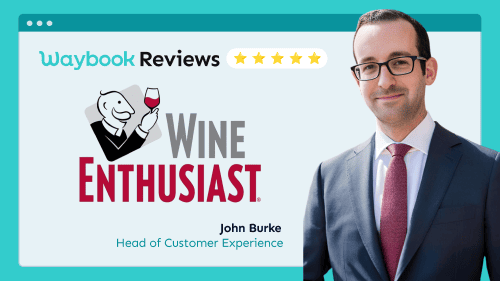
Wine Enthusiast's ecommerce team went from Post-it notes and emails to one place for every procedure, and new hires who spent their first two days in it. The measured result was $30,000 saved in a single month in refunds, returns and discounts, because the team applied the same rules the same way. John Burke, Head of Customer Experience at the time:

"We had new hires spend their first two days just working through Waybook. The quality of their questions improved dramatically."
Where SOP software sits between the helpdesk and the store
None of this replaces Shopify, Gorgias, Zendesk or your 3PL's portal. Those hold the orders, the tickets and the stock. A procedures tool holds the how and the limits, and proves who read them. Under ten people a tidy shared folder can carry it. Between ten and two hundred, read confirmation on the procedures that cost money is the reason to use a dedicated tool.
Tool | Pricing (from) | For a store | Honest limitation |
|---|---|---|---|
Waybook | Core plan includes 20 members; current prices on the pricing page | Read confirmation and quizzes on the procedures that cost money, role-based onboarding paths for reps and pickers, Shots screen capture for helpdesk and store admin steps, AI SOP creator | Not a helpdesk, not an order management system |
Trainual | Core $249/mo for 10 seats, +$3/seat, captured in-app August 2026, not published | Curriculum-style training paths | Price rises with seats, narrower process documentation |
Notion | Free, or Plus $10/seat/mo billed annually | Flexible pages, most teams already have it | No read confirmation, no proof a rep saw the new threshold |
Scribe | Free, or Pro Team $13/seat/mo, 5-seat minimum billed annually | Fast capture of helpdesk and admin click-throughs | Documents processes, does not manage them or confirm anyone read them |
Helpdesk macros or a shared drive | Included | Fine under ten people | Macros hold the words, not the limits; nobody knows who read what |
Competitor pricing verified August 2026 from each vendor's live pricing page. Check the vendor's page before you buy. For a fuller breakdown see our SOP software comparison, the direct comparisons at Waybook vs. Notion and Waybook vs. Trainual, and our guide to employee training.
Start your free trial at Waybook
Frequently asked questions
As the founder or head of customer experience, how do I stop being the bottleneck in an ecommerce business?
Write the authority down. For each order exception, set what a rep decides alone, what the customer service lead decides and what still comes to you, with thresholds in money. Put each one in a short procedure your reps can open with the customer on chat, and answer every question that still arrives with the link. The queue stops waiting for you within weeks.
How much can a customer service rep decide without asking?
Enough to close most tickets on the first touch: refunds without return under a low threshold, reships after a carrier check, partial refunds to honour a discount code, goodwill credits up to a set amount. Written limits protect the rep and the margin equally, because nothing above the line is decided without a lead or you.
What do marketplaces and payment providers expect a store to have written down?
Your returns policy as actually applied, the evidence pack you keep for chargebacks, your response process for marketplace messages, product safety and labelling checks, and how customer data is handled. Keep read confirmation on each so you can show who acknowledged which version and when.
How do we onboard new reps and warehouse pickers faster?
Replace shadowing with a written week one: tone on chat and email, the authority matrix, the ten exception procedures, the packing standard, how to escalate. Have new hires work through it before they touch a ticket, the way Wine Enthusiast did for two days, and track progress so you know when someone is ready to take the queue alone.
Does SOP software replace our helpdesk or store platform?
No. The helpdesk holds tickets and macros, the store platform holds orders. SOP software holds the how and the limits, and proves who read them. Under ten people a shared folder can do the job; between ten and two hundred, a dedicated tool such as Waybook earns its place on read confirmation and onboarding paths alone.
To see whether this fixes the problem, take the exception you get asked about most, write the three tiers of authority for it with real numbers, and watch whether your reps use it instead of asking. Start your 7-day free trial at Waybook and build your matrix there.